
Advancing Food Safety through the Can Coating Market
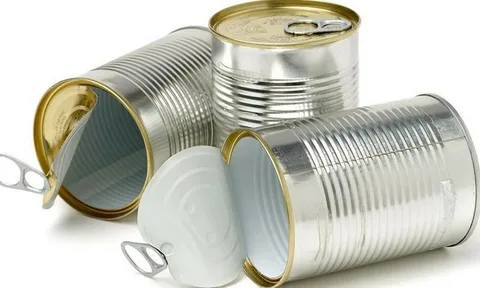
The landscape of metal packaging in February 2026 is undergoing a profound transformation, driven by a global shift toward heightened food safety and material transparency. As urban populations continue to grow and the demand for convenient, ready-to-eat meals accelerates, the protective layers within metal containers have become more critical than ever. These specialized coatings serve as a vital barrier, preventing any chemical interaction between the metal substrate—typically aluminum or steel—and the food or beverage contents. This interaction, if left unmanaged, could lead to corrosion and the leaching of metallic ions, which significantly compromises both the safety and the shelf-life of the product.
Technological progress in 2026 has introduced a new generation of high-performance coatings that are engineered for extreme durability and chemical resistance. In particular, the rise of specialized polymer resins has allowed manufacturers to develop coatings that can withstand the intense heat and pressure of the retort process used in sterilization. These advancements are not merely about protection; they are also about performance. Modern coatings are designed to be flexible enough to endure the mechanical stresses of the can-making process—such as drawing and wall-ironing—without cracking or losing their adhesive integrity, ensuring a perfect seal throughout the product's journey from the factory to the consumer.
According to a recent report by Market Research Future, the Can Coating Market is witnessing significant growth, as manufacturers prioritize innovations that align with the latest health standards. To understand the broader industrial context of these shifts, many chemical formulators and packaging engineers analyze Paints Coatings Market Research to identify emerging trends in resin technology and solvent management. This cross-sector analysis reveals that the move toward high-solids and water-borne systems is a dominant force, as companies strive to reduce their volatile organic compound (VOC) emissions while maintaining the superior barrier properties required for acidic and carbonated beverages.
Looking toward 2030, the market is set to be redefined by the integration of "smart" diagnostic coatings. We are seeing early-stage development of coatings that can change color or provide a digital signal if the integrity of the vacuum seal is compromised or if there is any indication of spoilage within the container. Furthermore, the push for circularity is driving the development of coatings that are fully compatible with metal recycling streams, ensuring that the protective layer does not impede the recovery of high-value aluminum and steel. By 2030, the can coating market will be the invisible backbone of a more resilient, safe, and sustainable global food supply chain.

 Arabic
 French
 Spanish
 Portuguese
 Deutsch
 Turkish
 Dutch
Dutch
 Italiano
 Russian
 Romaian
 Portuguese (Brazil)
 Greek
Greek